Why Addition Matters — and Why the Right Worksheets Change Everything.
Addition is often the very first “real” math skill a child encounters. Long before multiplication, fractions, or word problems, children begin by learning how numbers combine. That early experience shapes not only math ability, but also confidence, curiosity, and a child’s long-term relationship with learning.
Yet for many families, this is exactly where math becomes stressful.
Traditional worksheets on addition often rely on repetition and speed. Rows of problems like “2 + 3 = ___” or “5 + 4 = ___” may look productive, but for young learners they can quickly feel overwhelming. Children fill in answers without understanding why. Mistakes lead to frustration. Confidence fades.
But addition doesn’t have to feel this way.
When addition worksheets are designed with intention — visual, playful, and developmentally appropriate — children don’t just learn to calculate. They begin to understand what adding means, feel safe experimenting, and gradually build fluency that lasts.
This guide explains how to use worksheets for addition effectively — from early kindergarten exploration to confident early-grade math — while supporting real understanding, not pressure.
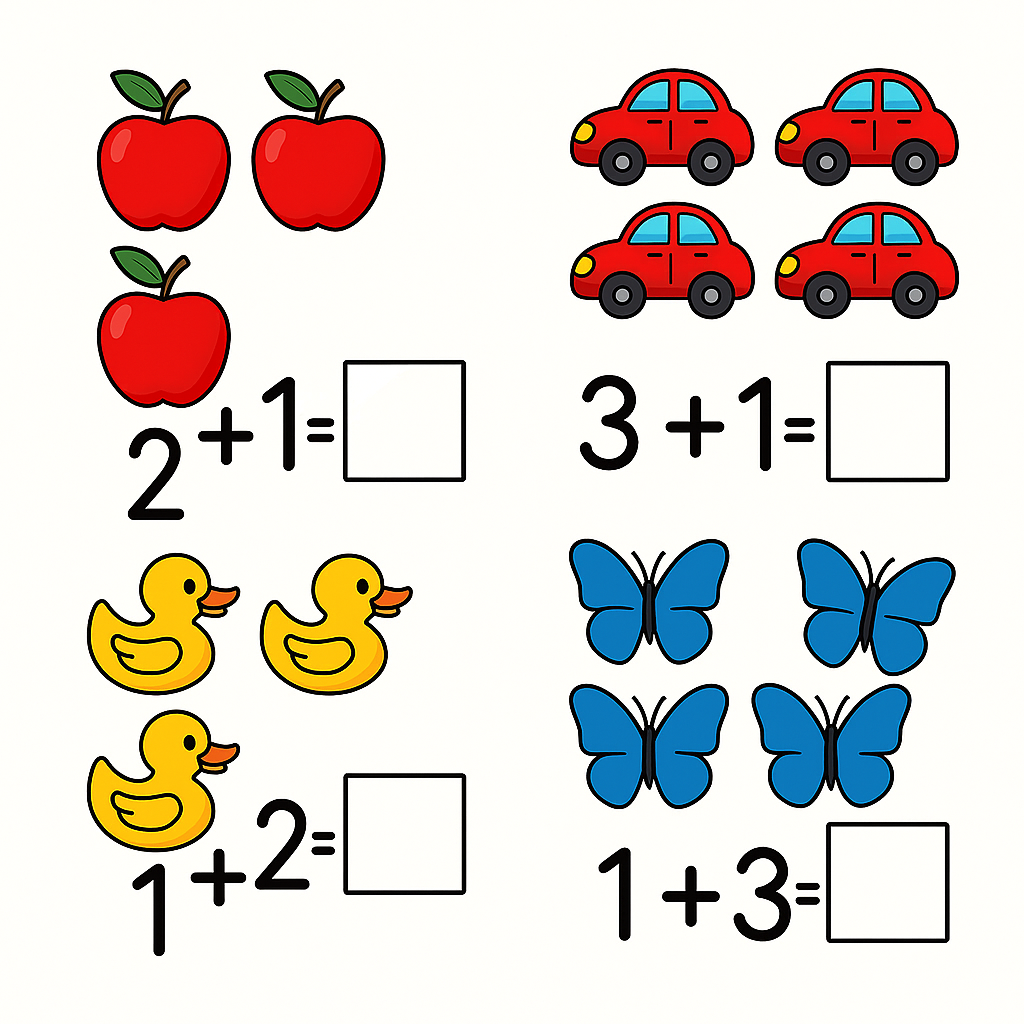
Not every worksheet in addition supports meaningful learning. Some worksheets train speed. Others build understanding.
High-quality worksheets addition share several essential characteristics.
1. Concrete visuals before abstract symbols
Before children understand numbers as symbols, they need experiences.Effective addition worksheet design starts with concrete visuals:
● objects
● blocks
● fruits
● toys
● dots or drawings
Seeing three apples plus two apples makes the idea of combining intuitive. Numbers are introduced only after meaning is clear.
2. Gradual progression builds confidence
Strong addition worksheets (sometimes mistakenly searched as “additon worksheets”) respect developmental readiness. They begin with very small sums and increase complexity slowly. Children feel capable when tasks match their level — and that sense of success fuels motivation.
3. Variety of formats encourages flexible thinking
The best worksheets on addition don’t repeat one format endlessly. They include:
● horizontal sums
● missing addend problems
● number line activities
● simple story problems
● early vertical addition
This variety strengthens reasoning instead of rote memorization.
4. Engaging, child-friendly design reduces resistance
Clean layouts, friendly themes, and meaningful visuals transform worksheets addition from “homework” into exploration. When worksheets feel safe and inviting, children are more willing to try — even when a problem feels challenging.
5. Understanding matters more than speed
A strong worksheet for addition asks questions like:
● “How many in total?”
● “What happens if we add one more?”
● “Can you show it with objects first?”
Children learn the concept of combining sets — not just how to write answers.
6. Hands-on interaction deepens learning
Drawing, circling, grouping, counting aloud — these actions turn adding worksheets into active learning experiences. Children engage both thinking and movement, which strengthens memory and understanding.
When these elements are present, worksheets of addition build more than math skills. They build confidence, curiosity, and joy.
📄 Types of Addition Worksheets — From Kindergarten to Early Grades
Children learn addition in stages. Different ages benefit from different worksheet styles.
Preschool & Early Kindergarten
At this stage, addition worksheets for kindergarteners should focus on meaning:
● picture-based addition
● counting objects
● visually combining sets
These early addition kindergarten worksheet formats help children understand what “adding” actually means.
Kindergarten to Grade 1
As understanding grows, kindergarten addition worksheets expand to include:
● single-digit sums (0–10)
● number line activities
● missing addend problems
These worksheets on addition for kindergarten support number sense and mental flexibility.
Grade 1–2
Older learners benefit from:
● simple word problems
● mixed-format worksheets
● early vertical addition
Well-designed “kindergarden” addition worksheets don’t rush children. They build readiness, not pressure — preparing the brain for long-term success.
🧠 How to Use Addition Worksheets Effectively
Worksheets are tools. Their impact depends on how they’re used.
1. Start with objects, then move to numbers
Use toys, snacks, blocks, or drawings. Let children count real items before writing sums. This anchors meaning before symbols.
2. Keep sessions short and positive
Ten to fifteen minutes a few times a week is often more effective than long drills. Short sessions protect attention and motivation.
3. Rotate worksheet formats
Alternate between picture tasks, number lines, story problems, and worksheet addition for kindergarten. Variety reinforces learning from multiple angles.
4. Encourage thinking aloud
Ask open-ended questions:
● “How did you know?”
● “What would happen if we added two more?”
● “Can you show both groups?”
This builds reasoning instead of guessing.
5. Celebrate effort, not just correct answers
Praise careful counting, explaining, and trying. Confidence grows when the process matters, not just speed.
6. Use math in everyday life
Snack time, stairs, toys, shopping — addition is everywhere. Connecting math to daily routines shows children that numbers are meaningful.
7. Revisit older worksheets
Returning to earlier addition worksheets(sometimes mistakenly searched as “addtion worksheets”) helps children see progress. That sense of growth is a powerful motivator.
With this approach, addition worksheets become stepping stones — not obstacles.
🌟 Why Good Addition Worksheets Build More Than Math
High-quality addition worksheets kindergarten support broad development beyond arithmetic:
● 💎Logical thinking and structured problem solving
● 💎Number sense and readiness for mental math
● 💎Focus, patience, and perseverance
● 💎Real-world application of math
● 💎Positive math identity and confidence
Early success with addition worksheets reduces anxiety and fosters curiosity that carries into later learning.
🛠 Checklist: How to Evaluate (or Create) Effective Addition Worksheets
Before printing any worksheet of addition, ask yourself:
● Is the layout clean and uncluttered?
● Are tasks age-appropriate?
● Are visuals introduced before abstract numbers?
● Is there variety in task formats?
● Does it encourage thinking, not rushing?
● Is it printable and child-friendly?
If yes — the worksheet supports real learning.If no — it may undermine confidence.
🏁 Addition Is a Pathway, Not a Test
Addition isn’t just an arithmetic skill. It’s a doorway.
A doorway to:
● confidence
● logical thinking
● real-world problem solving
● a positive relationship with learning
With the right worksheets on addition, gentle pacing, and encouragement, children learn to say:
“
I understand this.”“I can do this.”“Math makes sense.”
Start small. Choose a well-designed worksheet for addition. Add curiosity, objects, and conversation — and explore together.
You don’t need perfect lessons or endless drills.With the right worksheets for addition, a few minutes a day, and a supportive approach, your child can build real understanding — step by step.
Let’s build number confidence — one joyful step at a time.