When adults hear a child say “yes” or “no”, it sounds simple.
For many toddlers, preschoolers, and children in speech therapy, these tiny answers are huge milestones.
💎 “Do you want juice?” — Yes.
💎 “Is this a cat?” — No.
Behind each of these answers is something much bigger:
understanding the question, thinking, choosing, and expressing a clear response.
That’s why Yes/No worksheets are some of the most powerful tools for:
● parents
● preschool and pre-K teachers
● speech-language therapists
● parents
● homeschool families
When the preschool worksheet (often misspelled online as “preeschool worksheet”) is fun, visual, and child-friendly, children learn faster, feel more secure, and become more confident communicators.
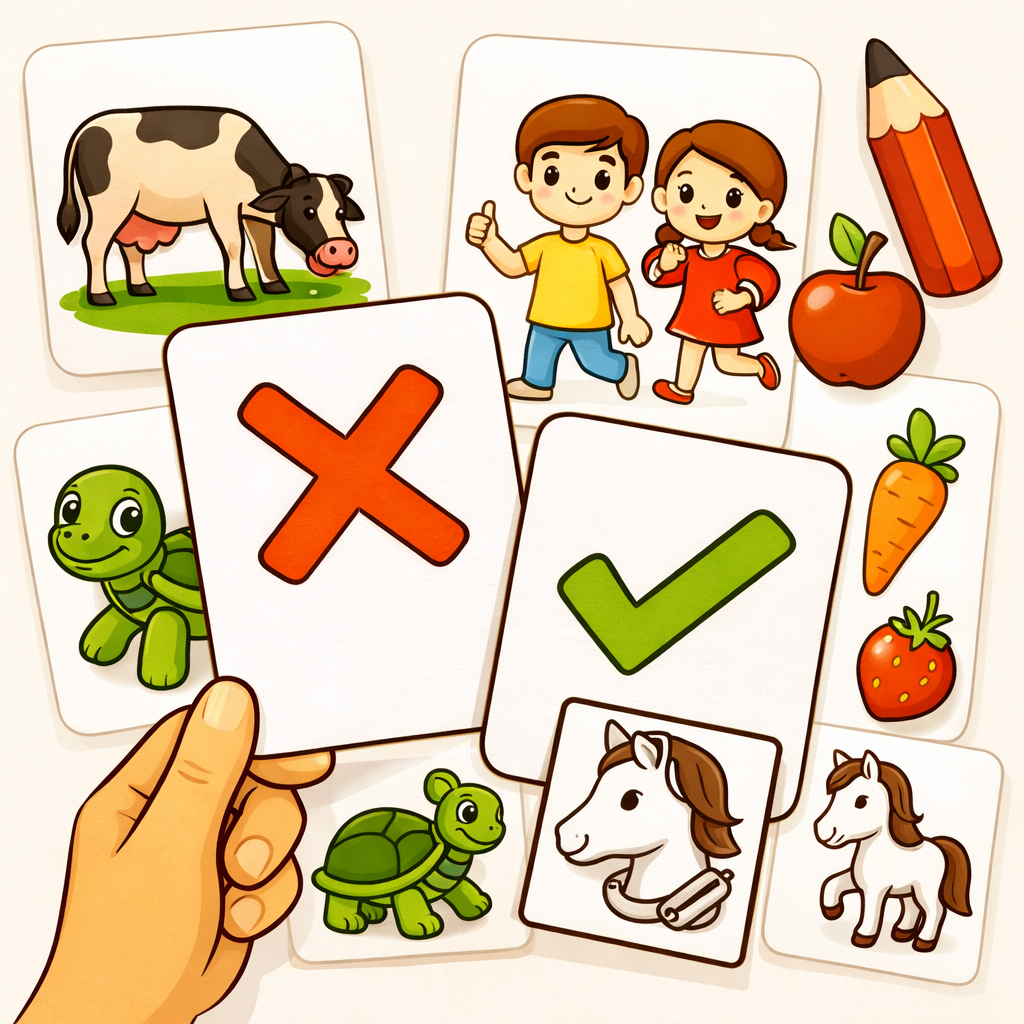
Answering questions isn’t “just talking”. It means a child can:
●💡 understand
what is being asked
●💡 think
about the answer
●💡 choose
between options
●💡 express
the answer clearly (with words or pointing)
That is a lot of cognitive work in a few seconds.
For many children — especially toddlers, neurodivergent learners, bilingual kids, and those working on activities for receptive language in therapy — this does not appear automatically. They need:
● visual support
● repetition
● structure
● and positive experiences of success
That’s exactly what well-designed Yes/No preschool worksheet (often misspelled online as “preeschool worksheet”) provides.
💎A Small Skill That Changes Daily Life
Think about how often children need to answer basic questions:
At home
🍎 “Do you want apples?”
🧸 “Is this your toy?”
🛁 “Do you want bath?”
At preschool or kindergarten
🎯 “Is this your pencil?”
📚 “Do we read now?”
🎨 “Do you want red apple?”
For safety and independence
🔥 “Is the stove hot?”
🚪 “Can we run outside?”
🚫 “Should we touch this?”
When a child does not yet have clear yes/no or choice-making language, everyday life gets harder:
● they cry instead of answering
● they shut down
● they guess at random
● they become frustrated and overwhelmed
When they learn to answer confidently, everything changes:
● routines become smoother
● adults understand them faster
● tantrums reduce
● the child begins to feel heard
Yes/No is a small form of speech with a huge impact on emotional regulation and behavior.
💎Why Worksheets Work Better Than Just Talking
For many children, purely verbal questions are too abstract.
When you say:
“Is this a cat?”
a child might:
● guess
● echo the last word
● say “yes” to everything
● freeze and say nothing
● misunderstand what you’re asking
But when they see two clear pictures — for example, a cat and a dog — the brain suddenly has something concrete to work with:
🐱💎Cat
🐶🔹 Not a cat
Visuals turn language into something the child can see, compare, and decide about, instead of just guessing.
That’s why Yes/No worksheets printables for kindergarten are used in:
● preschools activities
● pre-K centers
● worksheet printables for kindergarten
● ESL (English as a Second Language learners) groups
● early intervention
● structured preschool activities language sessions
They turn invisible mental processes into visible choices.
💎Yes/No Prekinders, Preschool Worksheets: Simple, Clear, Effective
Classic Yes/No worksheets use a picture and a short question:
🥕 “Is this a carrot?” — Yes.
🚗 “Is this a fish?” — No.
🐶 “Is the dog big?” — Yes.
🐱 “Is the cat flying?” — No.
Each little question helps build:
● 💡comprehension
● 💡attention
● 💡vocabulary
● 💡listening skills
● 💡expressive language (spoken or with pointing)
These worksheets work beautifully as a preschool worksheet (often misspelled online as “preeschool worksheet”) for home practice and as worksheet printables for kindergarten and pre-K classrooms.
They are:
● fast to use
● easy to understand
● motivating even for very young or hesitant learners
💎Ideal for Preschoolers, Kindergartners & Toddlers
They work wonderfully for:
💎late talkers
💎autistic learners
💎bilingual / ESL (English as a Second Language learners)
💎shy or selective speakers
💎children who often “guess” answers
💎toddlers just starting to use words
💎kids with receptive language delays
You can use them in many formats:
● pointing to the answer
● circling pictures
● placing tokens or clips
● digital display + printed response worksheet
One simple prekinders worksheets set can be used in multiple ways across the whole week.
💎For Parents: You Don’t Need to Be a Therapist
This is one of the easiest tools for speech therapy at home.
You simply:
1. Print a worksheet
2. Show the picture
3. Ask the question
4. Support your child in answering
Parents love using these because they:
● build confidence
● reduce tantrums caused by miscommunication
● help children express wants and needs
● take only 1–3 minutes per page
● work even with very young children
For many families, these are the first moments when a child answers clearly and the parent finally feels, “Now I understand what my child wants.”
💎For Teachers: A Classroom Game-Changer
Teachers use Yes/No prekinders and preschool worksheets as:
● small group tasks
● morning table work
● listening centers
● ESL (English as a Second Language learners) or language-support activities
● observation and assessment tools
● behavior and rule-check practice
Because every child can participate — even those who struggle with speech — these worksheets create:
● a feeling of success
● inclusion in group activities
● a gentle way to check comprehension
That’s why educators often choose them as core prekinders worksheets and worksheet printables for kindergarten.
Animals week 💎
Food week 💎
Weather week 💎
Toys week 💎
Emotions week 💎
Just pick a topic, generate the worksheets, and print.
💎For Speech Therapists: Essential, Flexible Material
Speech-language pathologists use these activities worksheets for receptive and expressive language to work on:
💡receptive language
💡understanding yes/no questions
💡negation (“not a cat”)
💡auditory processing
💡following directions
💡vocabulary expansion
Because they are so simple, therapists can even send them home as preschool activities language homework or parent training. Families feel confident using them independently.
💎Why AI-Generated Worksheets Are Better Than Random Printables Online
Most people searching online for a preschool worksheet (often misspelled online as “preeschool worksheet”)or Yes/No printables run into problems:
● too easy
● too hard
● poor image quality
● cluttered pages
● random formatting
● not age-appropriate
● long, frustrating preparation
An AI Worksheet Generator solves this in a few clicks:
● 💎choose Yes/No activity
● 💎select age and level
● 💎pick vocabulary (animals, toys, food, household items, emotions, etc.)
● 💎choose color or black-and-white
● 💎generate and print instantly
● 💎unlimited variety whenever you need it
Instead of spending hours preparing materials, you can spend those hours actually teaching, playing, and connecting with your child or students.
💎What Makes These Worksheets Special
Well-designed, AI-generated Yes/No worksheets are:
💡visually clean
💡with large, clear pictures
💡simple in layout
💡age-appropriate in vocabulary
💡quick to understand
💡fun and engaging
💡truly useful for real therapy and real classrooms
This is not “just another worksheet”.
It’s a practical communication tool that fits in your daily life.
💎What Real Progress Looks Like
At first, a child may guess:
💎
“Is this a dog?”➡“Yes.” (even if it’s a cat)
After practice with clear worksheets:
💎
“Is this a dog?”➡“No. Cat.”
That tiny “No. Cat.” means:
🧠real understanding
💬clear communication
😊growing confidence
🚀language development in action
You can notice:
● fewer meltdowns
● more cooperation
● easier morning and bedtime routines
● a happier child who feels heard
Sometimes a strong, confident “NO!” is the first real proof that a child finally has a voice.
💎What You Can Generate with AI
With the AI Worksheet Generator, you can quickly create:
● Yes/No worksheets
● pointing practice pages
● vocabulary builders
● activities for receptive language
● worksheet printables for kindergarten
● toddler-friendly pre-K worksheets
● tools for speech therapy at home
● visual support for ESL (English as a Second Language learners)
Everything is printable, ready to use, and easy to repeat.
Whether you’re a parent, teacher, or therapist, you get materials that feel custom-made for your child or your group.
💎When Is the Right Time to Start?
💡perfect for preschool
💡essential for pre-K readiness
💡used daily in kindergarten
💡helpful for older children with delays
If a child struggles with questions or saying “yes” and “no”, these worksheets offer a safe, structured way to practice.
💎Start Building Language the Easy Way
No laminating.
No hunting for pictures.
No buying dozens of workbooks “just in case”.
You simply enter what you need — and the AI creates the worksheets for you.
Help children understand questions.
Help them answer confidently.
Help them express themselves clearly.
Because communication isn’t just speaking — it’s being understood.